Part 1:
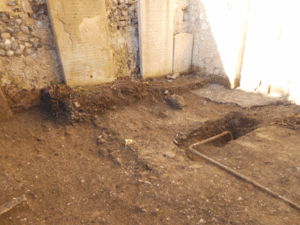
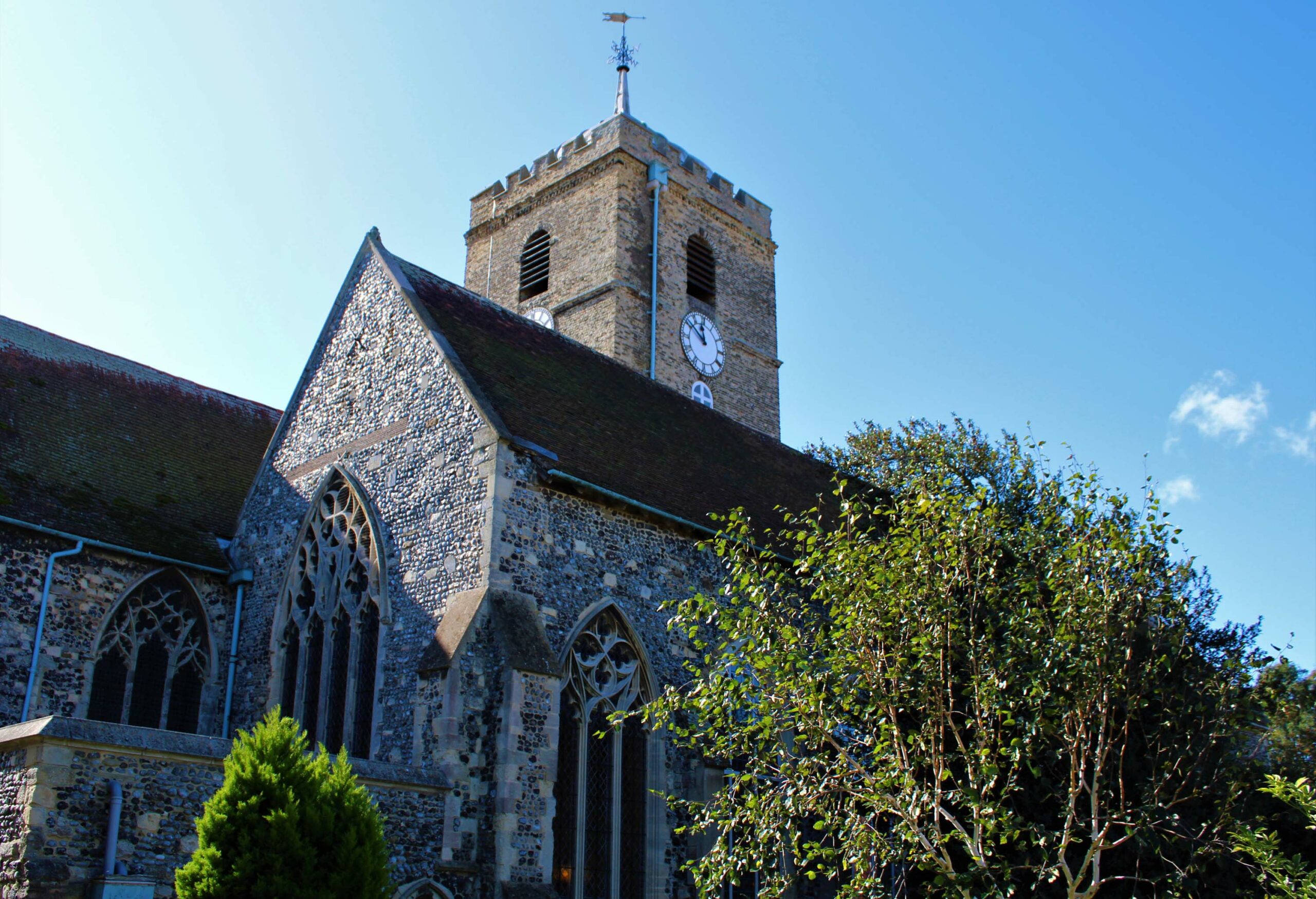
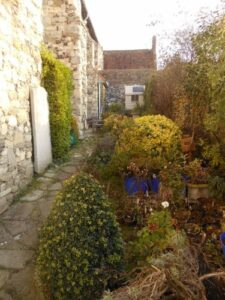
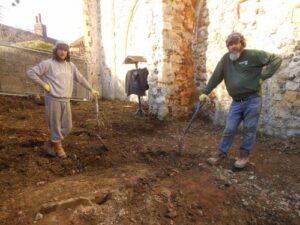
On January 18th, a large pile of uprooted plants were dug up, and Stone started to appear in the church yard of St Peter’s Church. This was the initial clearing of one part of the garden that occupied the area in what was once the South Aisle of the ancient church.
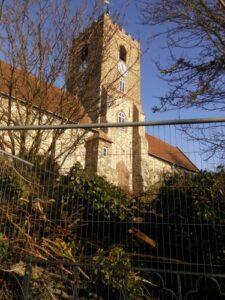
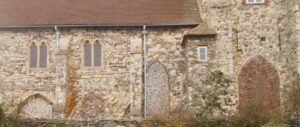
St Peter’s Church was originally built in Norman Times (1066 and all that) but was destroyed by the French in 1216 in one of the frequent raids they inflicted on the coastal ports of Kent. This resulted in the Plantagenet Kings creating the Cinque Ports as a line of defence and the development of a navy. At that time, Sandwich Haven, as it was known then, was a large port, the second only to London and directly on the coast. The alluvial soils from the Stour River ultimately silted up the port and its easy access to the channel.
St Peter’s was rebuilt by Carmelite monks from Normandy in the late 13th or early 14th century, most likely on the original foundations. In 1661, a large earthquake hit Sandwich, and the Norman tower collapsed, destroying the South Aisle. The fragments of stone were used to fill in the arches of the nave.
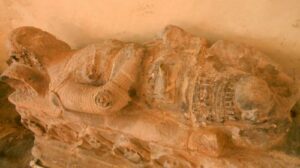
The more than slightly battered effigy of Sir John Grove of Staple, who helped build the South Aisle, was brought inside the church, where he rests to this day.
During the 16th and 17th centuries, Sandwich became a popular destination for Huguenot refugees fleeing religious persecution in France and the Low Countries. They contributed to the re-erection of the tower, and their influence can be seen in the Dutch-style cupola at the top of the tower.
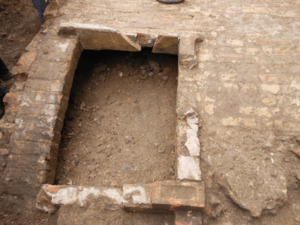
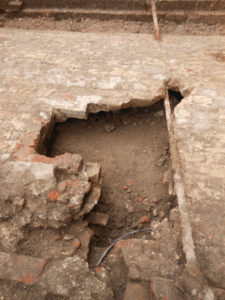
At the end of this first day, Jeremy Friend and Andrew Johnson of Garden Construction, who were brought in by the Canterbury Archaeological Trust to execute the initial clearing of the site, uncovered the vault of a crypt
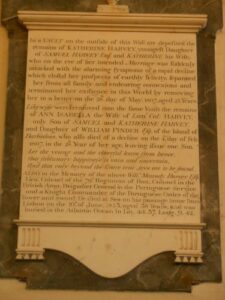
It would appear to be the vault that is mentioned on a marble plaque inside St Peters that in this vault are the remains of a Katherine Harvey who “on the eve of her intended Marriage was suddenly attacked with alarming symptoms of a rapid decline which closed her prospects of earthly felicity, separated her from all family and endearing connections and terminated her existence in this World by removing her to a better on the 28th day of May, 1807 aged 25years.”
Annie Partridge of the Canterbury Trust, who is directing this dig, has said that the remains of Katherine Harvey and other members of her family mentioned above will be left intact and not disturbed. The dig will go on around it.
Part 2:
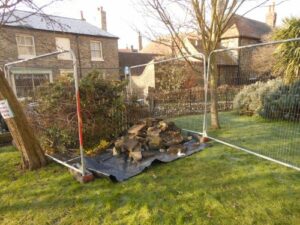
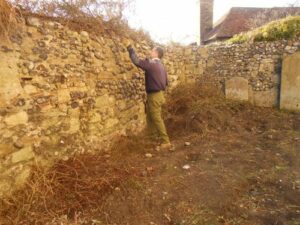
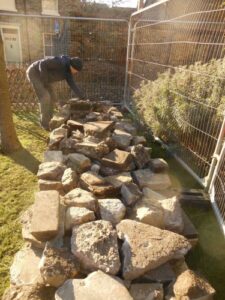
The site is in the final stages of being cleared, with the remains of the garden planting being hacked back. The stones that have been cleared are sorted out in the garden for restoration work later on.
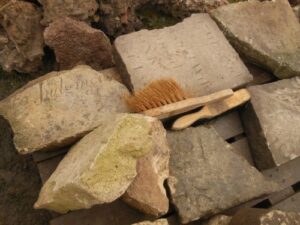
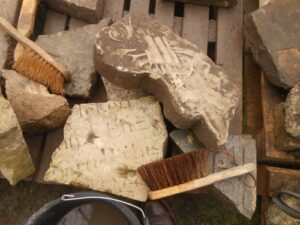
There are numerous fragments of carved stones which are set aside to be studied later. On Sunday, the 22nd, the local volunteers arrive to start digging down to see what is going on under the surface.
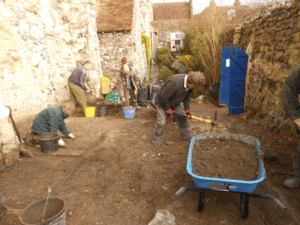
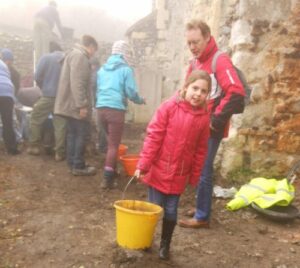
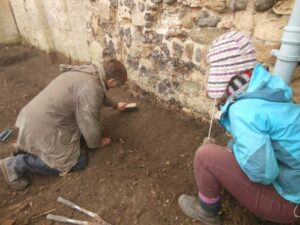
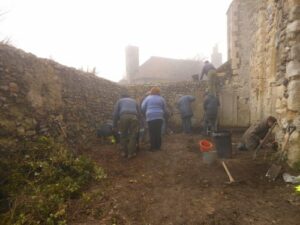
The volunteers are local residents… both young and old. In a short time, layers of soil and rubble are dug up and carted away… Stonework which has been below the surface for 400 years is exposed. A surface level is uncovered… and carefully swept up…. So that even the tiniest fragments can be sifted through.
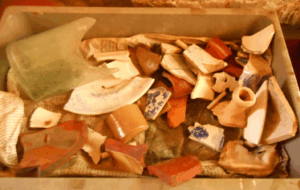
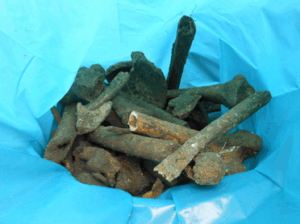
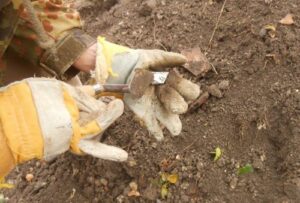
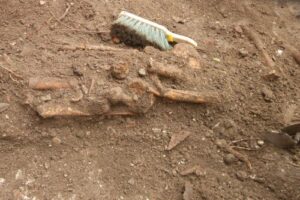
Small shards of glass and pottery are separated from the soil. This is a fragment of Delft pottery with its blue and white decoration still visible. Even scattered human bones that have lain for centuries have been uncovered.
Annie Partridge of the Canterbury Trust conjectures that these scattered bones were probably removed from the grave sites in what is now the cleared churchyard. The tombstones marking the ancient graves had been moved to stand against the churchyard walls, and any bones found were removed to be re-buried in the South Aisle site. All of the uncovered bones will be carefully removed and stored, and then properly buried in the South Aisle at the end of the dig.
Part 3:
The threatened rains held off, and the dig team on Saturday morning were hard at it, clearing away as much topsoil and scattered bits and pieces as they could scrape away.
It transpired that the discovered vault extended to the full width of the South Aisle and required some more exploration. As the topsoil was removed, some more serious digging could get underway.
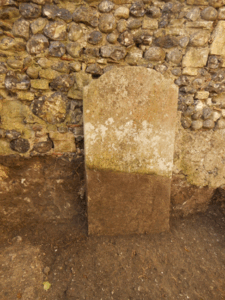
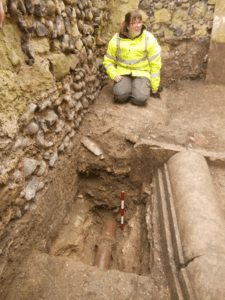
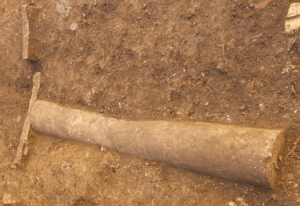
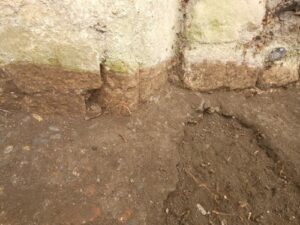
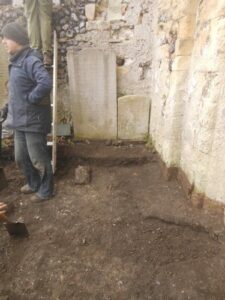
The dark area at the bottom indicates the amount of soil that has already been removed, exposing what was originally thought of as a column as actually a grave marker with the broken-off tombstone at the head, which would have contained the names and dates of the deceased.
The names will never be known and are probably a part of the carved rubble being carefully preserved in the gardens. After a hard morning of digging and scraping it was time for some lunch……
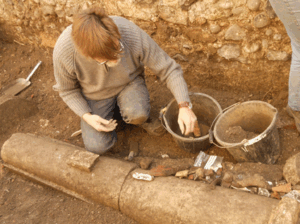
In the afternoon, various 20th-century plumbing and drain pipes presented themselves… one running straight through the vault whose entrance had been uncovered.
It is estimated that there are about 6 to 10 burials in this section of the South Aisle gardens, which might interfere with the original plan to install toilets for the use of visitors to the church.
This is the reason for initiating the archaeological dig which is a fact that I seem to have forgotten to point out earlier on. As the topsoil is removed, it is carefully searched for interesting bits and pieces…
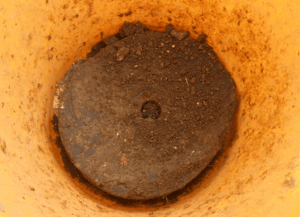
This is the official ‘BONE BAG’ where scattered human remains are kept. They will be carefully re-interred, probably in the uncovered vault at the end of the dig. The round stone with the hole in the middle at the bottom of a bucket is an undetermined object.
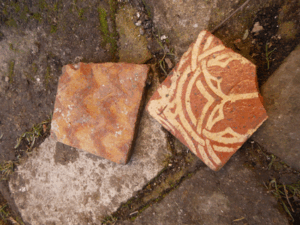
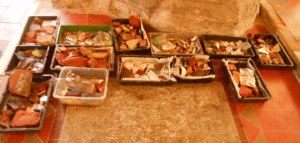
But what is most exciting is these two Norman floor tiles, which appeared. This gave us hope that others will be located intact when the original floor is revealed. Inside the church, trays containing the washed remains of old bits of pottery and glassware, including a 20th-century milk bottle.
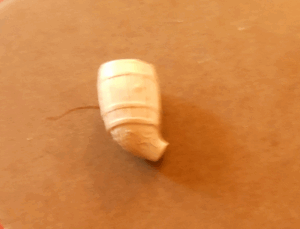
And of particular interest is the bowl of a 16th or 17th century clay pipe and what has tentatively been attributed as a 7th century shard of pottery which throws the dating of the site back a few hundred years or more.
The plan for next weekend is to extend the trench where the original floor level has been reached over to the wall of the church to see what lies beneath.